Black Mold Removal in Carson City, NV
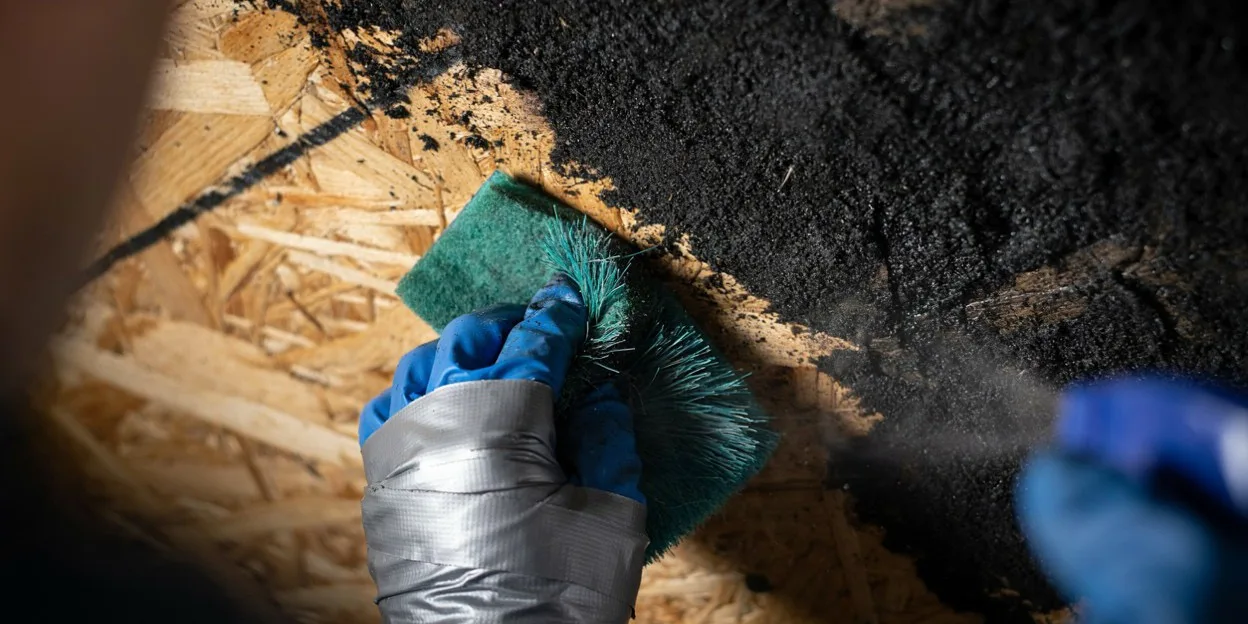
You moved the dresser away from the north wall of the back bedroom and found a dark patch, almost black, spreading up from the baseboard. The internet has already told you it is the worst kind. This site connects you by phone with an independent local provider who handles black mold removal in Carson City and the Carson Valley, and the first thing they will tell you is that the color does not decide the job.
What the crew does first
Several common molds turn dark on wet drywall and wood, and none of them can be named by eye. The crew does not try. They read the wall and the floor with a moisture meter, look for the water, and size the affected area. In that back bedroom the answer is usually a window that leaks at the sill, a frozen hose bib on the other side of the wall, or a crawl space under the room that stays damp.
Because dark growth is often a sign the material has been wet for a long time, the crew treats it as a full containment job from the start. Plastic seals the room, a HEPA air scrubber runs as negative air, and the workers wear respirators and suits. That is the standard for any porous material with heavy growth, dark or not.
What to do in the next hour
Do not scrub it. Do not spray it with anything. Scrubbing a heavy patch sends spores into the air, and bleach on drywall soaks the paper and leaves the growth inside the board alone. Put the dresser back a foot from the wall so air can move, close the door, and keep kids and pets out of the room.
Look for the water. Check the hose bib outside that wall, the window sill, and, if you can get to it, the crawl space hatch. Take photos of the patch with something for scale.
What is usually saved and what is removed
Drywall, baseboard, insulation, and carpet pad with heavy dark growth come out and are bagged inside the zone. Framing behind it is usually cleaned, sometimes lightly sanded or wire-brushed, and dried in place. Concrete, brick, and stone can be cleaned.
After removal, the crew HEPA vacuums and wipes every surface in the zone and runs drying equipment until the framing reads dry. The leak or the drainage problem is fixed before anything is closed. If the same dark growth runs along the joists under the room, the job continues as crawl space mold remediation. Putting the wall back is mold damage repair.
Carson City notes: north walls, frozen bibs, and old foundations
North-facing walls in Carson City stay cold from November to March, and the inside surface of a poorly insulated one runs cool enough for indoor moisture to condense behind furniture. That is why the patch is so often behind the dresser or in the corner of a closet on the north side.
The other local source is the hose bib. A bib on the north or east wall that was not drained before a hard freeze can split inside the wall and leak every time someone runs the hose in April. In the 1860s to 1920s homes on the West Side, stone and brick foundations wick snowmelt into the sill and the bottom plate, and dark growth on the inside of a cellar or crawl space wall is common.
Mold can aggravate allergies and breathing problems for some people, and dark growth is no more or less of a concern than any other heavy growth. If someone in the house has asthma, keep them out of the room until the containment is up. Nobody on this site diagnoses anything, and a provider should not either.
Calling about black mold removal
Have the address, where the patch is, and roughly how big it is. Mention any window leak, hose bib, or crawl space under the room. Call (775) 242-6705.