Mold Removal in Dayton, NV
Dayton argues with Genoa over which is Nevada's oldest town, and it has a case: placer miners were working the mouth of Gold Canyon here around 1850. The town took its name from surveyor John Day in 1861, burned in 1866 and 1870, and stayed small until the 1990s, when subdivisions spread across Dayton Valley on the east side of the Carson River. It went from 826 people in 1970 to more than 15,000 in 2020, up 69 percent in the last decade alone.
So the housing is two towns. Old Town Dayton along Main Street and Pike Street has brick and wood buildings from the 1860s through the 1920s on stone foundations, at about 4,400 feet on the river. Dayton Valley has stick-built homes from the 1990s and 2000s, many on slabs, on flat ground the river has flooded in January 1997, at New Year's 2006, and in February 2017.
This site connects Dayton homeowners with an independent local mold provider. You call, describe what you see or smell, and the provider decides what to bring.
Dayton mold, old town and new
In Old Town the call is usually a damp cellar or crawl space under a stone foundation, which is crawl space mold remediation. In Dayton Valley it is more often a house that took river water once and was dried from the top, leaving growth at the bottom of the walls; that is mold removal and, when it runs through several rooms, whole-home mold remediation.
Where to call in Dayton
The river's history is on display at Dayton State Park, where the ruins of the 1861 Rock Point Mill sit on the Carson River at the foot of the Virginia Range, a short walk from the neighborhoods that flood. The Historical Society of Dayton Valley keeps the record of the fires, the floods, and the buildings that survived both.
Water and sewer come from Lyon County Utilities, and rebuild permits go through the Lyon County building department in Yerington.
Call (775) 242-6705 to be connected with a local mold provider serving Dayton.
Services Available in Dayton
Mold Removal
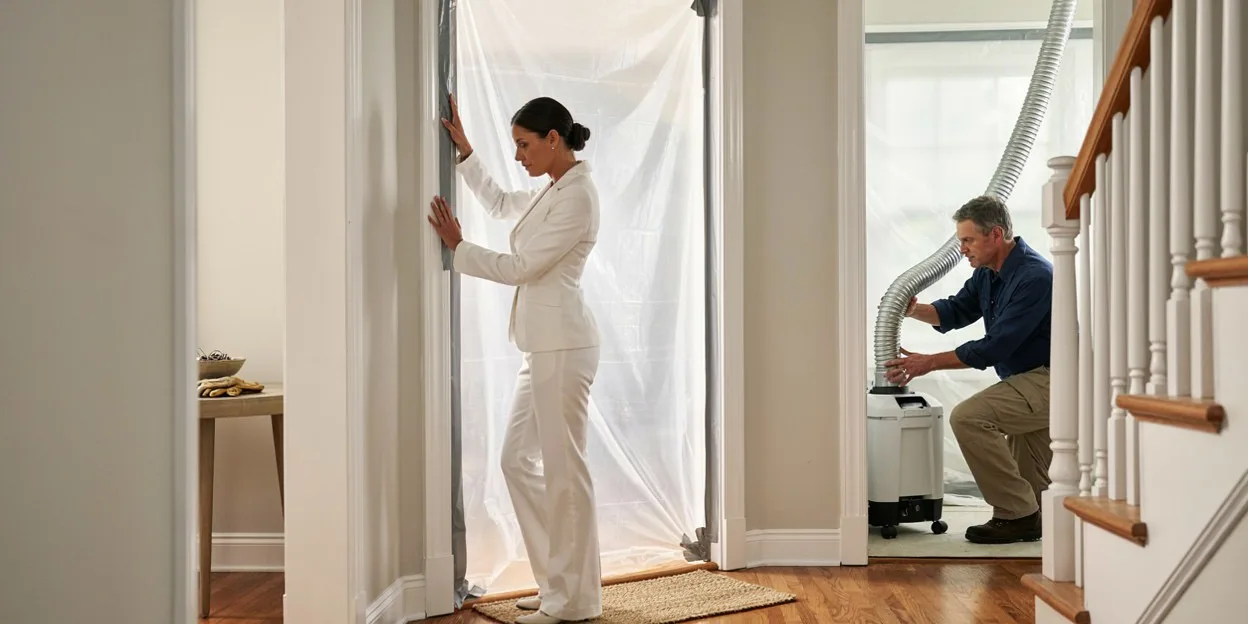
Containment, negative air, and HEPA filtration while wet drywall, trim, and insulation come out, then cleaning and drying down to the framing.
Black Mold Removal
Dark growth on a wet wall or crawl space beam, handled under full containment. Color does not name the species, and the process is the same.
Whole-Home Mold Remediation
Room-by-room containment and removal after a burst pipe, a long roof leak, or a house that sat closed and wet through a Carson City winter.
Crawl Space Mold Remediation
Joists, subfloor, and insulation under the house cleaned or removed, with the snowmelt, plumbing, or drainage source fixed before it is closed up.
Bathroom Mold Removal
Growth in ceilings, drywall, and behind vanities from steam and slow leaks, the most common first call from older Carson City homes.
Attic Mold Remediation
Roof-deck and rafter mold from ice dams, swamp cooler lines, and warm indoor air hitting a cold roof, cleaned and the cause corrected.
Mold Damage Repair
Drywall, baseboard, subfloor, and cabinet bottoms put back after removal, only once the framing reads dry and the leak is stopped.
Mold Odor Removal
Finding and removing the damp material behind a musty smell that outlasted cleaning, then treating surfaces and air so it stays gone.